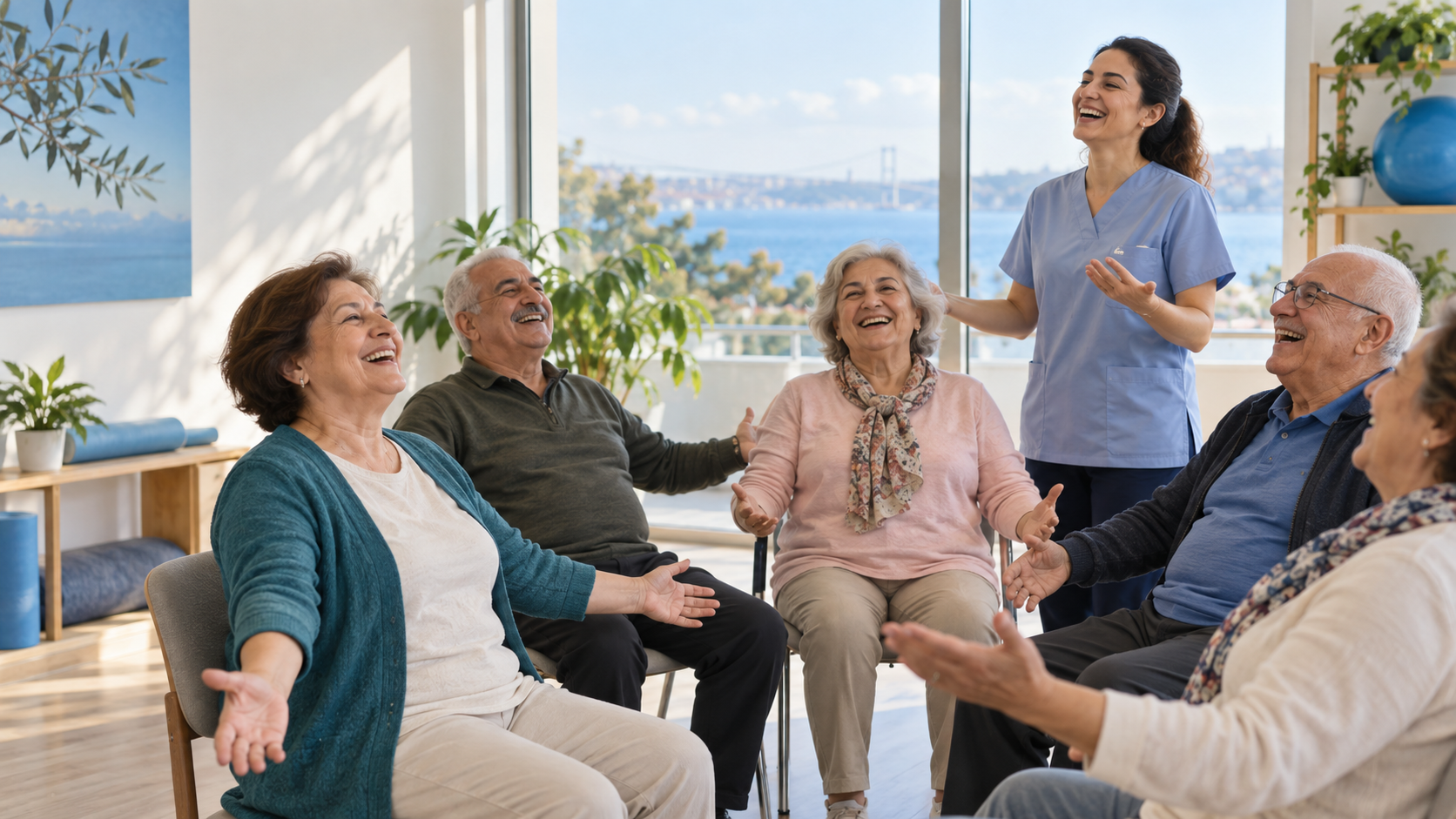
Laughter Yoga May Ease COPD Breathlessness: Study
A structured eight-week laughter program helped people with chronic obstructive pulmonary disease feel less breathless and report better overall health.
A new randomized controlled trial from Türkiye provides encouraging evidence that structured laughter therapy may benefit people living with chronic obstructive pulmonary disease, commonly known as COPD.
COPD is a long-term lung condition that makes breathing difficult. It can affect sleep, movement, energy, emotional wellbeing and the ability to carry out everyday activities. Although laughter cannot repair damaged lungs, the study suggests that regular laughter practice may help people experience less breathlessness and cope better with the effects of the condition.
About the study
The study was conducted by Goncagül Aldan, Leyla Özdemir, H. Kılıç and A. Karalezli. The researchers were associated with the Faculty of Nursing at Hacettepe University and the Faculty of Medicine at Ankara Yıldırım Beyazıt University.
Participants were recruited through the Chest Diseases units of Ankara Bilkent City Hospital in Türkiye. The research was conducted between August 2022 and October 2024. The findings were presented at the European Respiratory Society Congress in Barcelona on 7 September 2026.
The study included 63 adults with symptomatic COPD. They were randomly divided into three equal groups:
- 21 participants received laughter therapy.
- 21 participants practised pursed-lip breathing exercises.
- 21 participants received health education and acted as the control group.
What did the laughter group do?
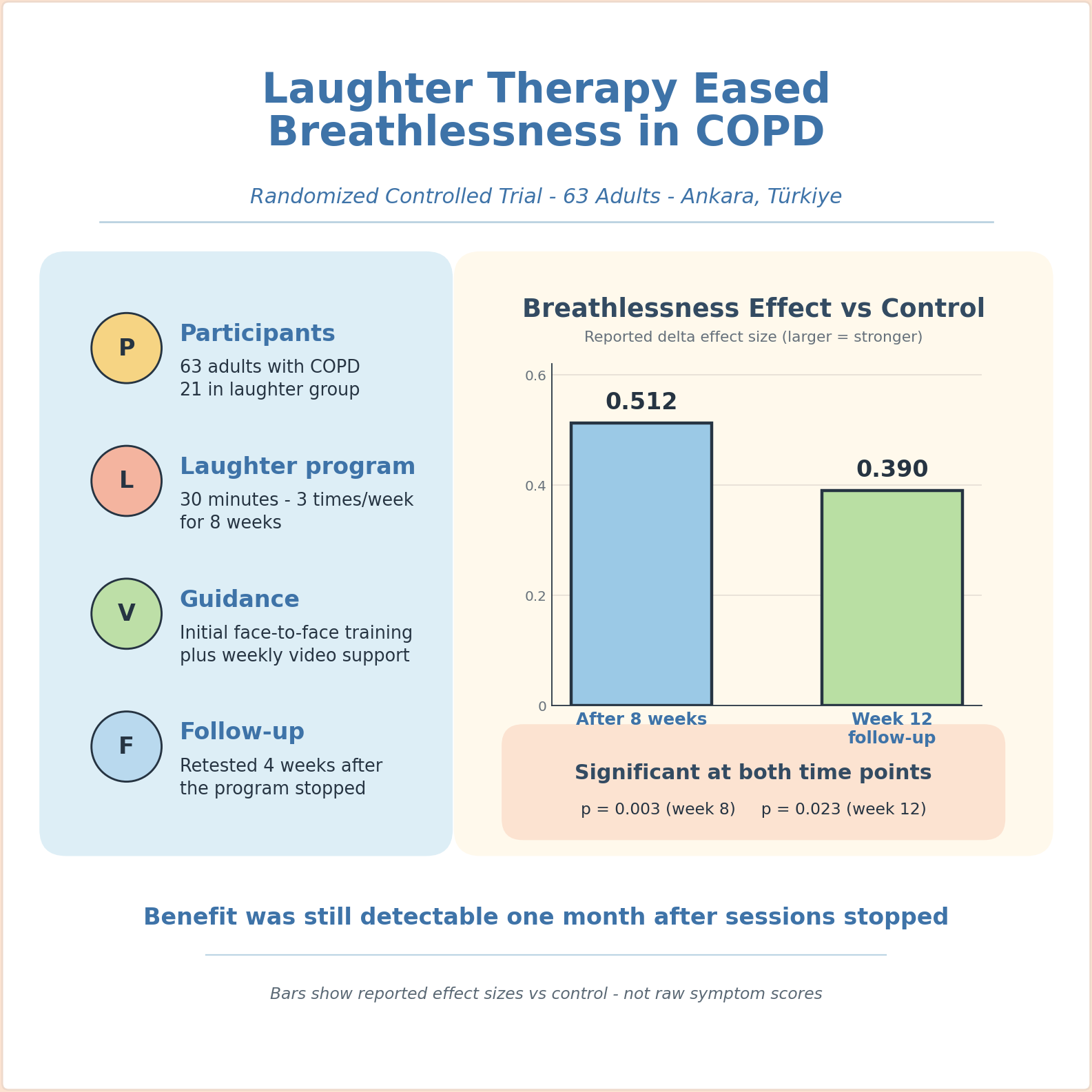
The laughter therapy group received an initial face-to-face training session lasting approximately 50 minutes.
They then practised for 30 minutes, three times a week, for eight weeks—a total of 24 planned sessions. Two sessions were completed independently at home, while one session each week was supported through a video call.
The program included rhythmic clapping, playful simulated laughter, vocal sounds, laughter meditation, gentle breathing, smiling and relaxation.
These activities closely resemble important elements of Laughter Yoga, including voluntary laughter, playfulness, breathing and relaxation. However, the researchers used the term “laughter therapy” when describing their intervention.
Participants were assessed before the program and again at weeks 4, 8 and 12. The week-12 assessment showed whether any benefit remained four weeks after the sessions had stopped.
What did the researchers find?
At the end of eight weeks, participants in the laughter therapy group reported significantly less breathlessness than those in the education-only control group.
The improvement in breathlessness was still statistically significant at week 12—four weeks after the laughter program had ended.
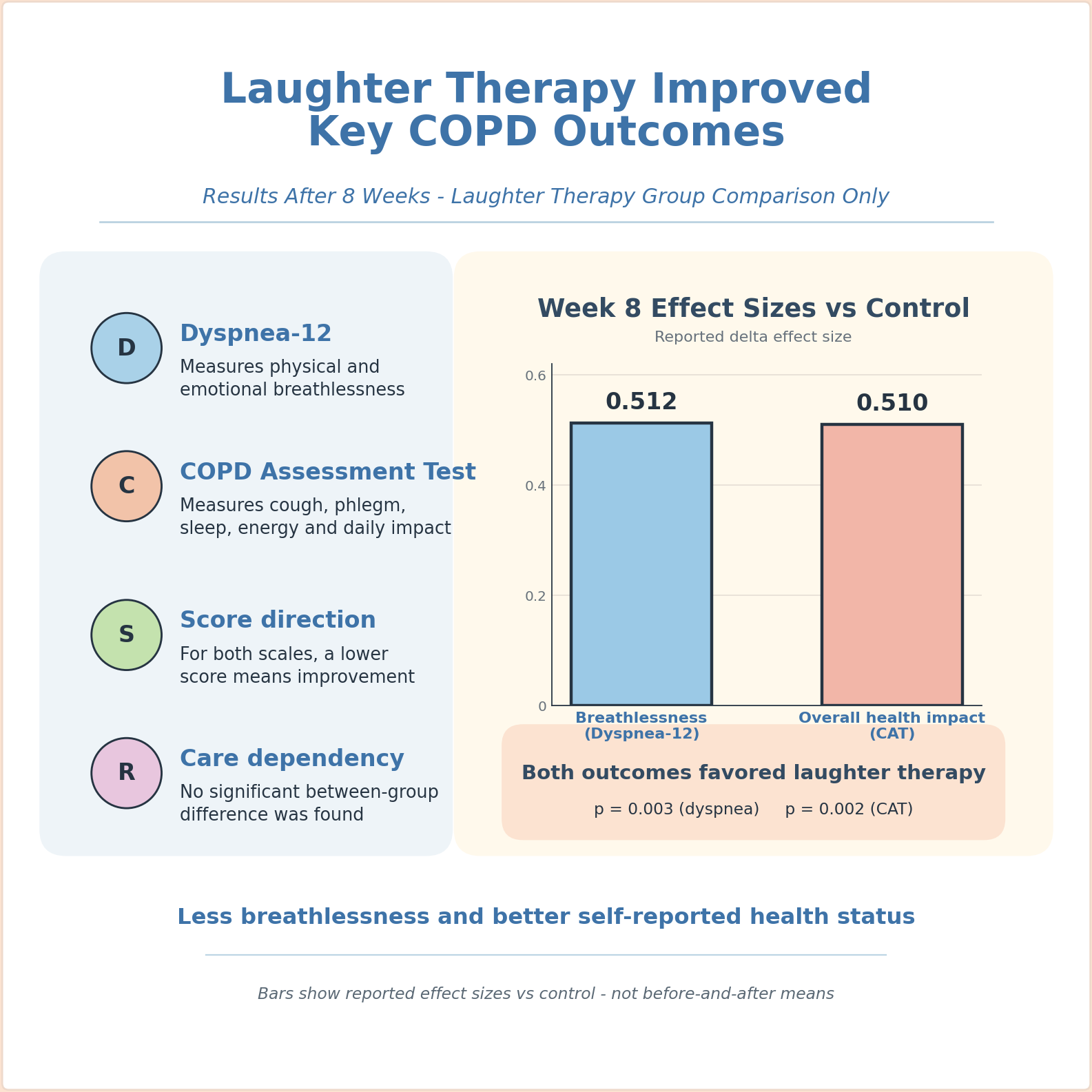
The laughter group also reported better COPD-related health status at week 8. This assessment covered symptoms and daily-life difficulties such as coughing, phlegm, sleep, energy, physical activity and the overall impact of COPD.
However, the study did not find a significant improvement in care dependency—meaning the amount of help participants needed from others.
Key results
- Breathlessness at week 8: significant benefit compared with control p = 0.003; effect size = 0.512
- Breathlessness at week 12: benefit remained after four weeks without sessions p = 0.023; effect size = 0.390
- Overall COPD health impact at week 8: significant benefit compared with control p = 0.002; effect size = 0.510
- Care dependency: no significant difference between groups
Why is this study important?
The findings support the idea that intentional laughter can be practised as a health exercise, even when there is no joke or humorous situation.
For people with COPD, structured laughter practice may offer an enjoyable and affordable way to complement regular medical care. Its home-based format and remote support could also make it accessible to people who find frequent hospital or clinic visits difficult.
This study does not show that laughter therapy cures COPD, repairs the lungs or replaces inhalers, pulmonary rehabilitation or medical treatment. The outcomes were based mainly on participants’ reported symptoms rather than measurements of lung function or oxygen levels.
The trial was also relatively small, involving 63 people from one hospital. The published conference abstract does not provide detailed before-and-after scores, adverse-event data or longer-term follow-up.
The message for Laughter Yoga
This research adds promising scientific support for using structured laughter and breathing practices as a complementary wellbeing intervention for people with chronic respiratory disease.
Laughter exercises should be adapted to each person’s physical ability and introduced with appropriate medical guidance—particularly for people with severe COPD or other significant health conditions.
The most responsible conclusion is simple: regular, guided laughter practice may help people with COPD feel less breathless, improve their perceived health and bring more joy into the management of a difficult chronic illness.