



Did you like our new design?

Quick Links
Building Emotional Intelligence Through Laughter Yoga
Article by Dr. Madan Kataria
|
August 31 2026
|
475
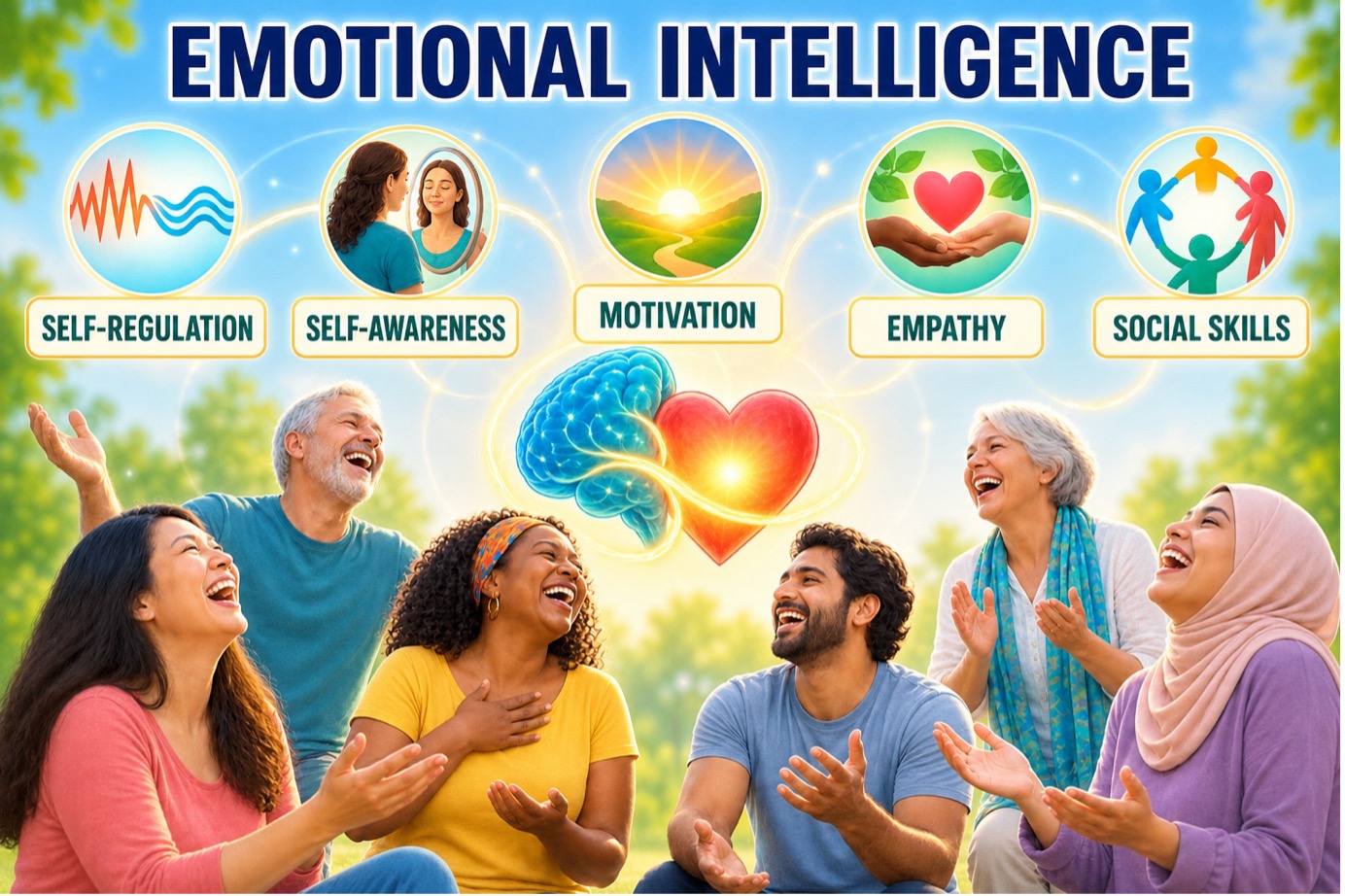
"Emotional intelligence is not about controlling emotions. It is about understanding them, managing them wisely and using them to build healthier relationships and a happier life. Laughter Yoga provides a practical way to exercise many of these emotional skills every day."
Introduction
In today's fast-paced world, success is often associated with intelligence, academic qualifications and professional achievements. Yet many highly intelligent people struggle with stress, anxiety, relationship problems and burnout. At the same time, individuals with average intellectual abilities often lead happy, successful and fulfilling lives because they possess something equally important—Emotional Intelligence (EQ).
Psychologist Daniel Goleman brought worldwide attention to this concept through his bestselling book Emotional Intelligence: Why It Can Matter More Than IQ. He demonstrated that our ability to recognise, understand and manage emotions plays a crucial role in determining our happiness, health, leadership and relationships.
Around the same time, another movement was quietly spreading around the world. In 1995, Laughter Yoga was born in Mumbai, India, based on a revolutionary idea: people can laugh without relying on jokes, humour or comedy. By combining intentional laughter with yogic breathing, playful movements and eye contact, Laughter Yoga creates positive emotional experiences that benefit both body and mind.
Although Laughter Yoga was not originally designed to teach emotional intelligence, it naturally strengthens many of the emotional skills that Daniel Goleman describes. It helps people become more aware of their emotions, regulate stress, connect with others, develop empathy and build emotional resilience.
Rather than viewing Laughter Yoga simply as an exercise programme, we can see it as daily emotional fitness.
What Is Emotional Intelligence?
Emotional Intelligence refers to our ability to understand and manage emotions—both our own and those of other people. According to Daniel Goleman, emotional intelligence consists of five major components:
- Self-awareness
- Self-regulation
- Motivation
- Empathy
- Social skills
These skills influence every area of life:
- Relationships
- Parenting
- Teaching
- Leadership
- Healthcare
- Teamwork
- Personal wellbeing
Unlike IQ, emotional intelligence is not fixed. It can be developed throughout life through awareness, practice and experience. This is one reason why Laughter Yoga has such great potential.
Emotional Hijack
Modern neuroscience tells us that our brain has two important systems working together. The amygdala acts as our emotional alarm system. It reacts instantly to fear, anger and danger, often before we have time to think. The prefrontal cortex is the thinking part of the brain responsible for reasoning, judgement, planning and impulse control.
When stress becomes excessive, the emotional brain can overwhelm the thinking brain. Daniel Goleman called this an Amygdala Hijack.
We have all experienced this:
- Saying something we later regret
- Losing our temper
- Panicking under pressure
- Making poor decisions when emotionally upset
The goal of emotional intelligence is not to eliminate emotions but to create a pause between emotion and reaction. That pause allows wisdom to replace impulse.
Why Modern Life Challenges Emotional Intelligence
Our ancestors experienced stress occasionally. Today many people experience stress continuously. Work pressure, financial worries, family responsibilities, social media, information overload and uncertainty keep the nervous system activated almost all the time.
When stress becomes chronic:
- patience decreases
- creativity suffers
- relationships deteriorate
- decision-making becomes poorer
- empathy declines
In such a state, even small problems appear overwhelming. Developing emotional intelligence has therefore become one of the most important life skills of the twenty-first century.
Laughter Yoga: A Practical Way to Train Emotional Skills
Most people know they should "stay calm" or "think positively."
The real question is:
How?
Reading books alone rarely changes emotional habits.
Emotional intelligence develops through repeated emotional experiences.
Laughter Yoga offers exactly that.
By combining:
- intentional laughter
- deep yogic breathing
- playful exercises
- eye contact
- group interaction
Participants experience genuine positive emotional shifts even without external reasons to laugh. Instead of waiting for life to make us happy, we learn to create happiness from within. This simple change has profound implications for emotional wellbeing.
How Laughter Yoga Supports Emotional Intelligence
1. Self-Awareness
Self-awareness is the ability to recognise what we are feeling. Many people remain unaware of their emotional state until stress becomes overwhelming.
Due to Stress people experience
- tight shoulders
- shallow breathing
- mental fatigue
- emotional heaviness
After fifteen or twenty minutes of laughter session they experience
- relaxation
- lightness
- increased energy
- clearer thinking
- improved mood
Observing these emotional changes strengthens self-awareness.
2. Self-Regulation
Recognising emotions is only the first step. The next challenge is learning how to respond wisely. Laughter Yoga activates the body through rhythmic laughter and breathing, followed by a period of relaxation.
Many participants report that regular practice helps them:
- recover more quickly from stress
- become less reactive
- remain calmer during conflict
- think more clearly under pressure
Rather than suppressing emotions, Laughter Yoga appears to improve emotional recovery.
3. Motivation
Emotionally intelligent people are motivated by purpose rather than external rewards alone. Laughter Yoga teaches an important lesson:
Joy can be created intentionally.
Participants discover that they do not have to wait for success, money or perfect circumstances before feeling positive. They learn to generate positive emotions through their own actions. This builds confidence, optimism and resilience.
4. Empathy
Empathy is the ability to understand another person's feelings. Laughter Yoga creates empathy naturally.
When people laugh together:
- eye contact increases
- barriers disappear
- trust develops
- social connection grows
Age, language, profession and nationality become less important. Shared laughter reminds us that we are all human. This strengthens compassion and understanding.
5. Social Skills
Human beings are social creatures. Healthy relationships depend upon communication, trust and cooperation. Laughter is one of the oldest forms of human bonding. Laughter Yoga creates a safe and playful environment where people become more open and approachable.
Many organisations now use Laughter Yoga to improve:
- teamwork
- communication
- creativity
- morale
- workplace relationships
The Science Behind Laughter
Research on laughter and Laughter Yoga has demonstrated many physiological and psychological benefits.
Studies suggest that laughter may:
- reduce stress hormones such as cortisol
- stimulate endorphins
- improve oxygen intake
- enhance positive mood
- strengthen social bonding
- improve psychological wellbeing
Other research in positive psychology shows that positive emotions broaden thinking, increase creativity and improve problem-solving.
Emotional Intelligence in Daily Life
Schools
Teachers with high emotional intelligence create happier classrooms. Students become more confident, cooperative and emotionally resilient. Laughter Yoga can improve both teacher wellbeing and classroom atmosphere.
Healthcare
Doctors, nurses and caregivers work under constant emotional pressure.
Laughter Yoga offers a simple method for reducing stress while maintaining empathy and compassion.
Corporate Organisations
Today's organisations increasingly value emotional intelligence over technical ability alone. Successful leaders inspire people. They remain calm during challenges. They communicate with empathy. Laughter Yoga helps build psychologically safe workplaces where creativity and collaboration flourish.
Families
Families that laugh together often communicate better. Children learn emotional intelligence by observing emotionally healthy adults. Shared laughter reduces tension and strengthens emotional bonds.
Emotional Fitness
Most people understand physical fitness. Very few think about emotional fitness.
Just as muscles become stronger through regular exercise, emotional intelligence grows through repeated emotional practice.
Every Laughter Yoga session becomes an emotional workout.
Participants practise:
- letting go of tension
- deep breathing
- positive thinking
- joyful expression
- empathy
- connection
- resilience
Over time these emotional habits begin to influence everyday life.
Conclusion
Daniel Goleman transformed our understanding of success by showing that emotional intelligence often matters as much as intellectual intelligence.
Laughter Yoga provides a simple, practical and enjoyable method for strengthening many of the emotional skills that emotional intelligence requires.
By reducing stress, improving emotional awareness, encouraging empathy, strengthening social bonds and helping people recover more quickly from life's challenges, Laughter Yoga supports emotional growth in a natural and enjoyable way.
What is your reaction?
Quick Links


Daily Laughter Yoga

825

Excellent
Website Ratings
1723

Good