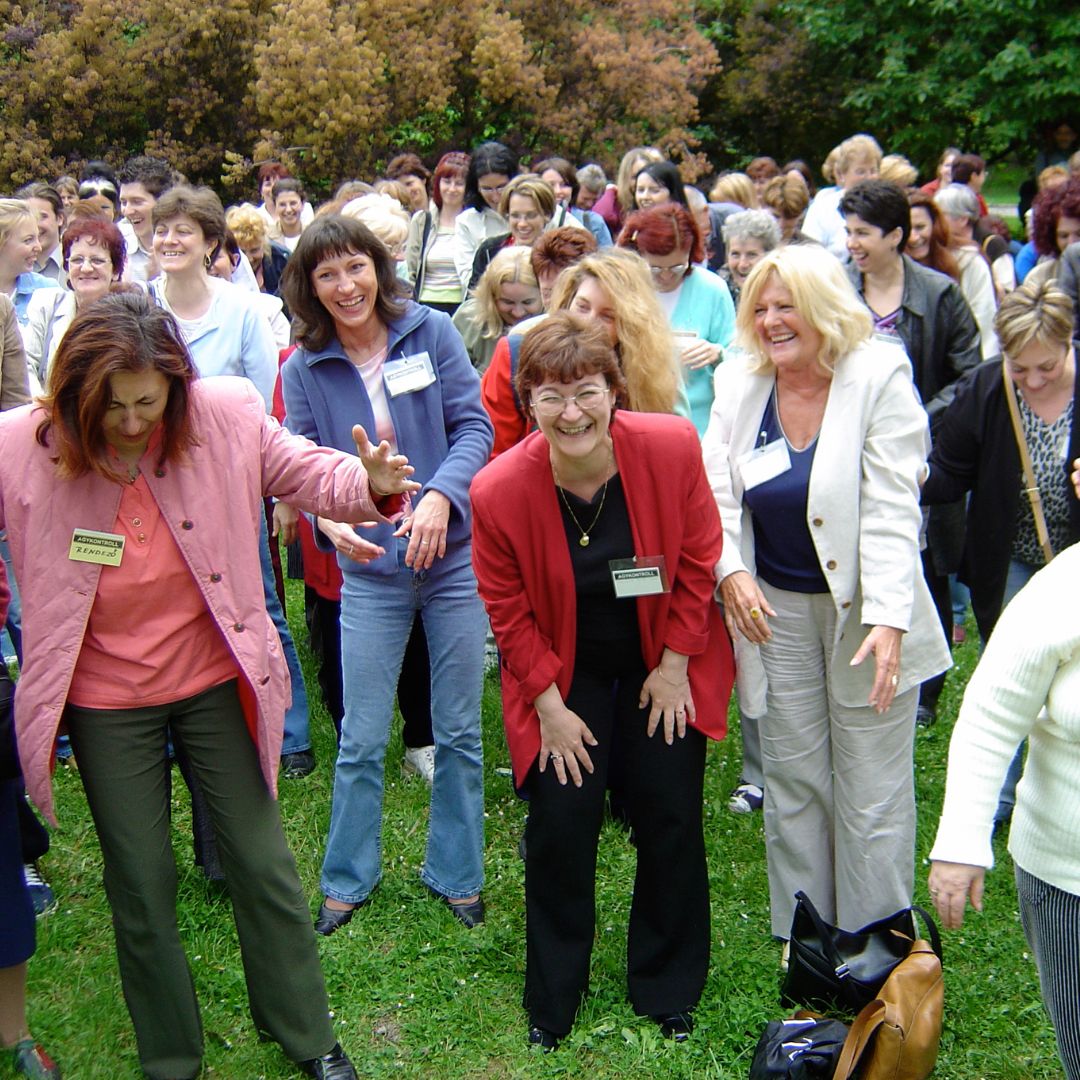
The Psychophysiological effects of observing Laughter Yoga visually without physical participation.
Authors and Affiliation:
- Attila Szabo, Tímea Berkes, and Ferenc Köteles are affiliated with the Institute of Health Promotion and Sport Sciences, ELTE Eötvös Loránd University, Budapest, Hungary.
- Ferenc Ihász is affiliated with the Institute of Sport Sciences, ELTE Eötvös Loránd University, Szombathely, Hungary.
Date and Place of Study:
The study was published in the Baltic Journal of Sport & Health Sciences in 2021 and was conducted in Budapest, Hungary.
Objectives of the Study:
The study had several key objectives:
- To investigate the psychological effects of observing Laughter Yoga visually without physical participation.
- To explore the physiological responses (such as changes in heart rate and respiration rate) to both visual and active participation in Laughter Yoga.
- To compare the energy expenditure during Laughter Yoga to the basal metabolic rate (BMR) to determine if Laughter Yoga could be classified as a form of physical exercise.
- To assess the relationship between humor styles, expectancy about the effects of laughter, and the psychological changes due to Laughter Yoga.
Study Protocol:
Study 1: Visual Experience of Laughter Yoga
Participants: 13 young women, average age 21.92 years (standard deviation ± 1.66 years).
Methods:
Participants watched a video titled “Laughter Yoga 40 Foundation Exercises” for about 25 minutes.
Psychological measures such as Positive and Negative Affect Schedule (PANAS), Feeling Scale (FS), and Felt Arousal Scale (FAS) were used to evaluate changes in mood and arousal before and after watching the video.
Heart rate and respiration rate were monitored using Firstbeat TeamBelts to assess physiological responses.
Procedure: Participants were equipped with heart rate monitors and observed a Laughter Yoga session via video. They completed questionnaires assessing mood and physiological responses before and after the session.
Study 2: Practice Experience of Laughter Yoga
Participants: 25 older women, average age 63.83 years (standard deviation ± 11.91 years). Most participants were above 52 years, except two aged 35 and 40.
Methods:
-
- Participants attended a regular Laughter Yoga class in Budapest.
- Similar psychological and physiological measures as in Study 1 were used (PANAS, FS, FAS).
- Heart rate and respiration rate were also monitored.
Procedure: Participants signed consent forms, completed initial questionnaires, and wore heart rate monitors. They then participated in a real-time Laughter Yoga session, after which they repeated the psychological assessments and provided feedback on their experience.
Key Findings and Outcomes:
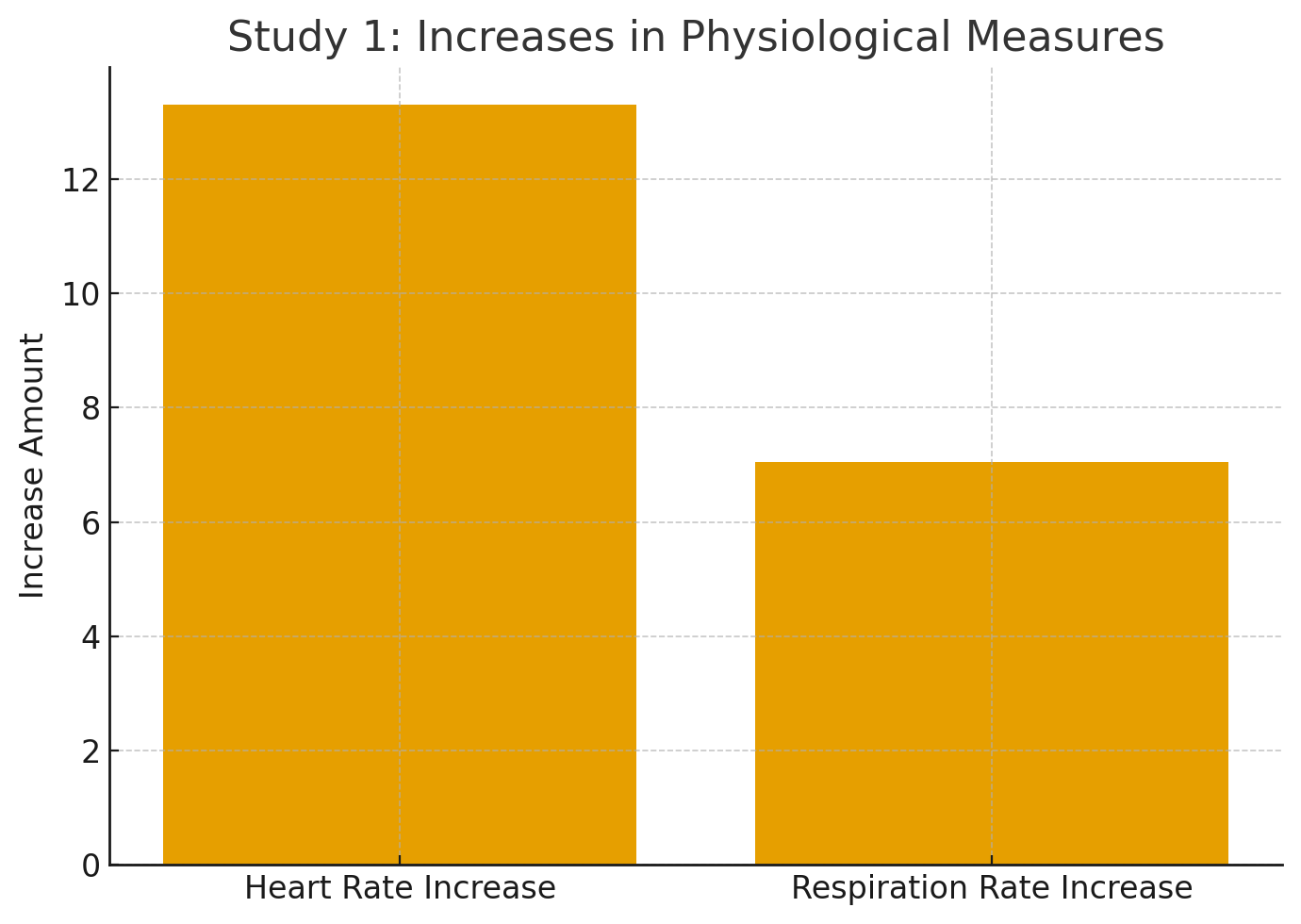
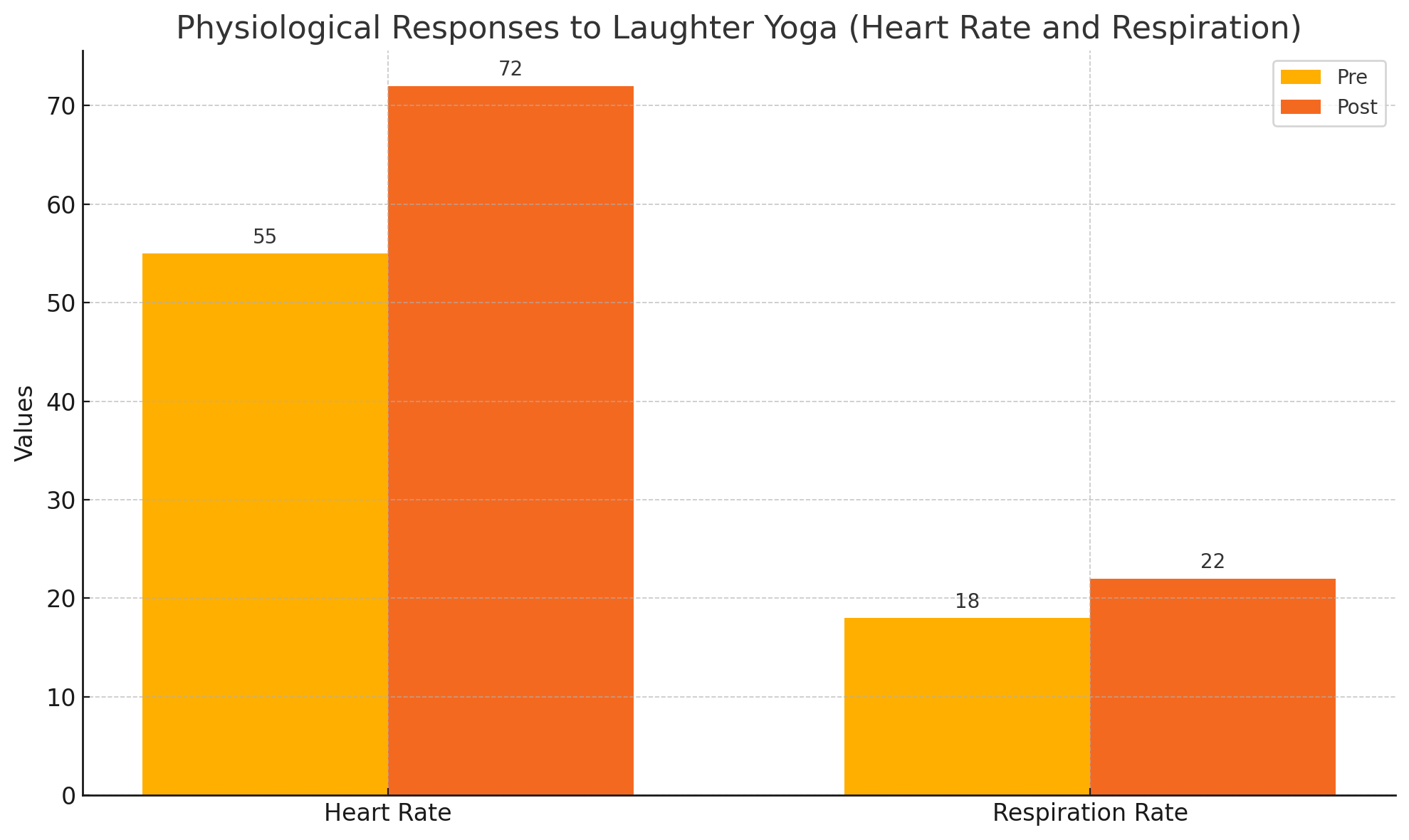
Study 1 (Visual Experience): Physiological changes, show the increase in Heart Rate and Respiratory Rate
Heart Rate increased by ~13.3 beats per minute
Respiratory Rate increased by ~7 breaths per minute
Psychological Effects:
Study 1 (Visual Experience): Watching the Laughter Yoga video resulted in:A significant decrease in negative affect, suggesting reduced negative emotions.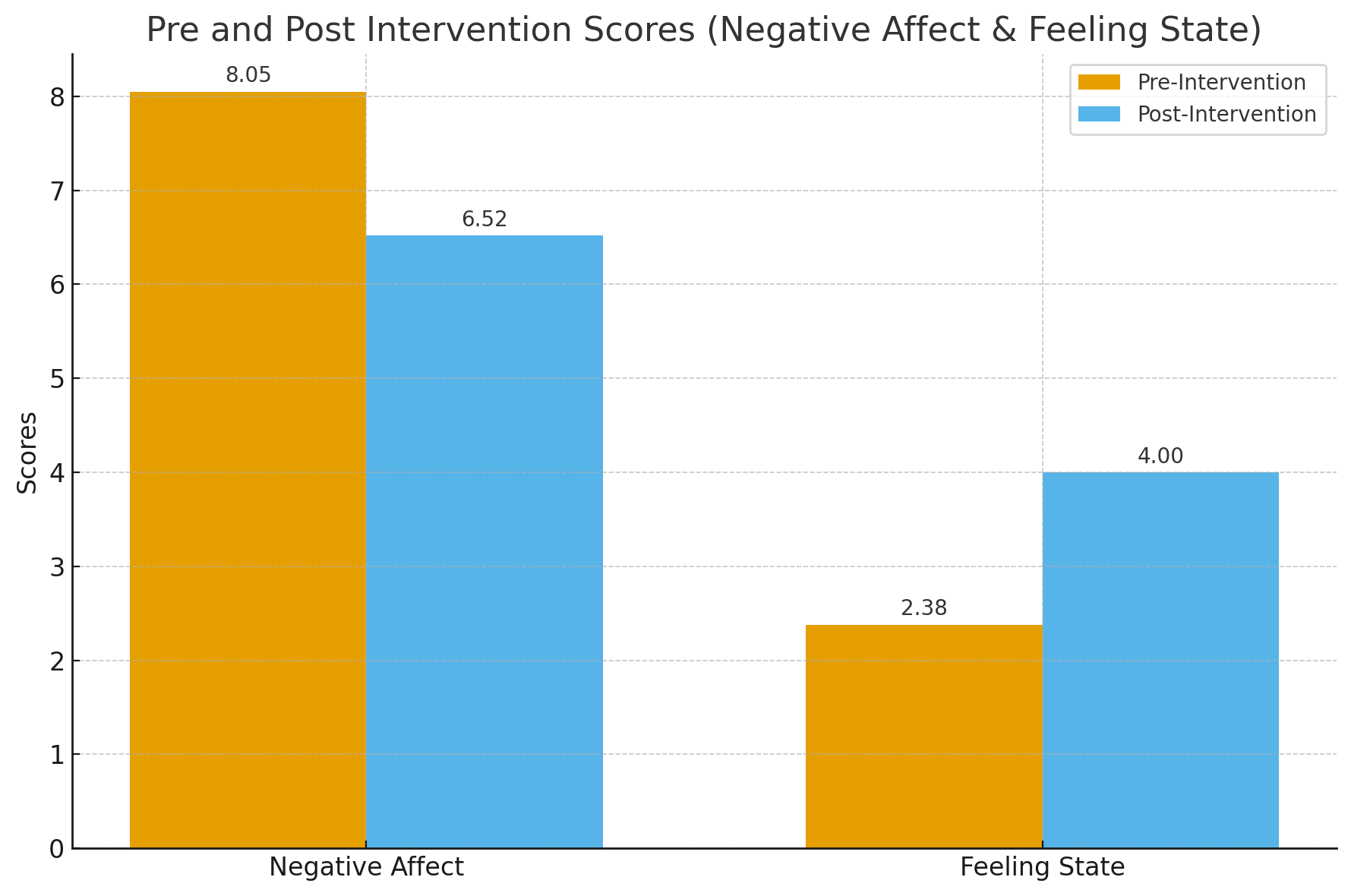
An increase in feeling states and perceived arousal, indicating improved mood and heightened awareness or excitement.
No significant changes were observed in positive affect, indicating that just watching Laughter Yoga might not boost positive emotions as effectively as participating in it.
Study 2 (Laughter Yoga Practice Experience)
Active participation in Laughter Yoga led to:
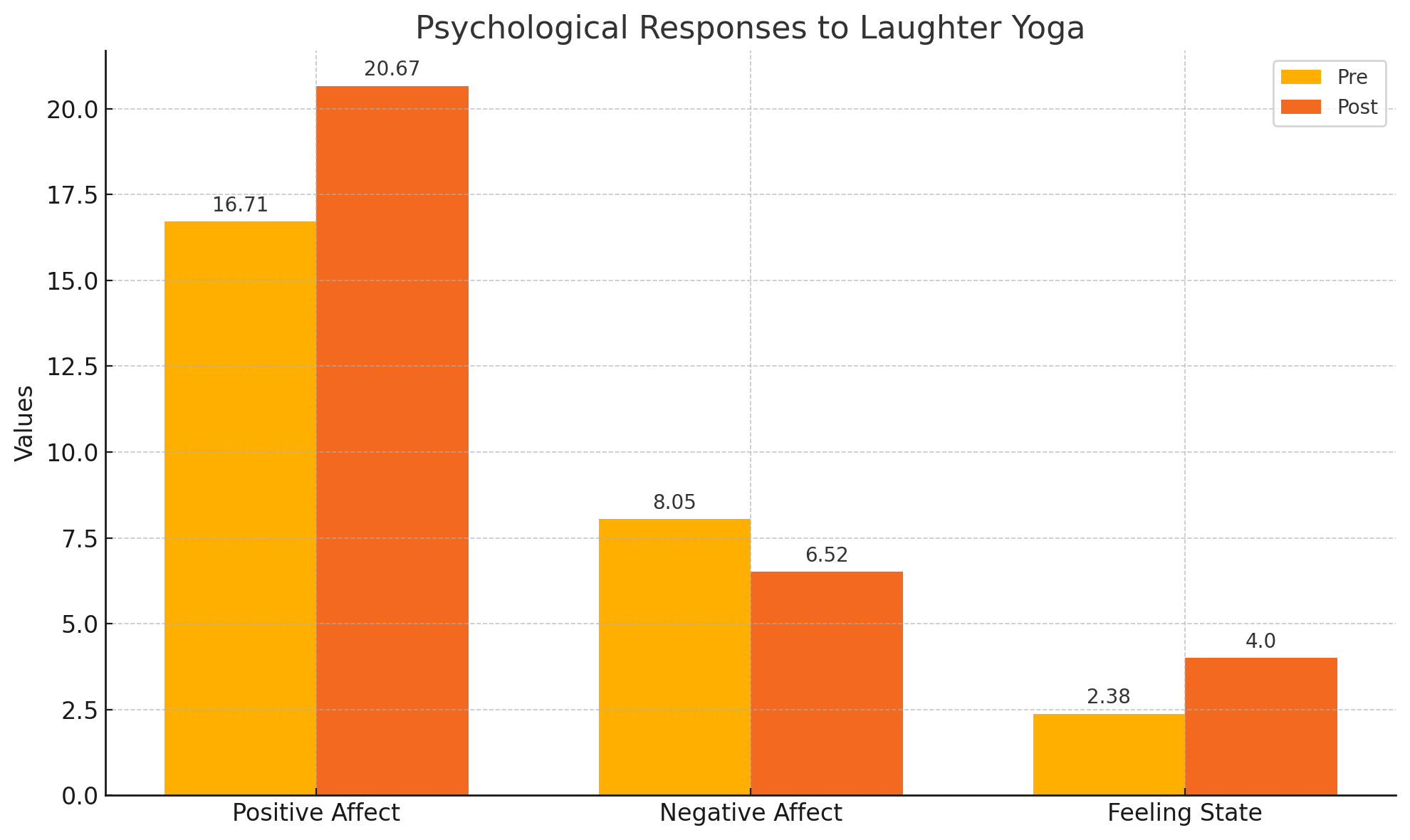
Increased positive affect and feeling states, showing a boost in positive emotions and overall mood.
Decreased negative affect, further supporting the mood-enhancing benefits of engaging in Laughter Yoga.
Increased felt arousal, suggesting that participants felt more energized and alert after the session.
Physiological Effects:
Study 2: A significant increase in heart rate was observed during the Laughter Yoga class, comparable to light to moderate physical exercise. Most participants’ heart rates were in the “warm-up zone” (51% of the time), with some time spent in the “fat-burning” and “aerobic training” zones.
Conclusion:
The study concludes that Laughter Yoga has significant positive psychological and physiological effects on women. Watching or participating in Laughter Yoga can enhance mood, reduce negative emotions, and slightly increase physical arousal.
Laughter Yoga also involves mild physical activity, making it a safe, enjoyable, and health-promoting exercise, particularly for older adults. It provides an accessible form of recreation that can offer both emotional and physical benefits, regardless of individual differences in humor perception or expectations.
Practical Implications:
- For Older Adults: Laughter Yoga can be recommended as a gentle exercise option that provides psychological and physical health benefits. It’s particularly useful for those with limited mobility or a preference for low-impact activities.
- For Health Promotion: Laughter Yoga could be integrated into programs aimed at improving mental and physical well-being in community and clinical settings, offering a unique approach to health promotion through laughter and mild physical activity.
Please click on the link to get the original research paper.